VARKALA, KERALA: 21/09/29 There are destinations where the sea is merely a landscape, and then there are places where the sea becomes a part of life, faith and memory. Varkala, on Kerala’s Arabian Sea coast, belongs unmistakably to the latter.
During my recent stay at Varkala Hindustan Beach Resort, the vast expanse of the Arabian Sea stretched directly before us, creating an extraordinary setting where the sound of waves seemed to merge with the rhythms of coastal life. Yet Varkala is much more than a beautiful beach destination. It is a place where spirituality, ancestral traditions, temple heritage, fishing culture and contemporary tourism exist side by side.
Papanasam: A Sacred Shore for Ancestors
The spiritual character of Varkala becomes especially visible at Papanasam Beach, the sacred stretch of coastline associated with ancestral rites. The beach is an important pilgrimage centre for Hindu families who come to perform Pitru Tarpanam, Shraddha and Bali in memory of departed ancestors.
Kerala Tourism describes Karkidaka Vavu Bali as an important ancestral ritual, during which devotees gather at beaches and waterways to offer prayers and ritual offerings for their departed forefathers. At Varkala, priests associated with the ancient Janardhana Swamy Temple traditionally assist devotees with these rites.
For a visitor, the sight is deeply moving. In the early hours, families can be seen sitting close to the shore, performing rituals with devotion and reverence. The offerings are eventually entrusted to the waters of the Arabian Sea.
For many families, the sea here assumes the sacred role of a final pathway for remembrance. The waves become a symbolic bridge between the living and those who have passed away.
The Ancient Janardhana Swamy Temple
Rising above the coastline is the historic Sri Janardhana Swamy Temple, one of Varkala’s most important pilgrimage centres. Dedicated to Lord Janardhana, a form of Lord Vishnu, the temple is situated close to Papanasam Beach and has a long association with ancestral rites. Kerala Tourism describes it as an ancient temple with a history extending back around 2,000 years.
Reaching the temple involves climbing a broad flight of steps. The ascent itself creates a gradual transition from the bustle of the coastal town to the quiet spiritual atmosphere of the temple precinct.
During our visit, our group of journalists from South Korea, Thailand, Bulgaria, Delhi and Bengaluru climbed the steps to the temple, witnessed the traditional worship and experienced the serenity of the sacred surroundings.
Inside the temple complex, an old banyan tree adds to the atmosphere of antiquity. Kerala Tourism specifically notes the presence of the old banyan tree and serpent-deity shrines within the temple grounds.
Standing there after the long climb, one feels that Varkala’s spiritual identity cannot be separated from its landscape. The temple above, the sacred shore below and the Arabian Sea beyond form one remarkable cultural landscape.
The Fascinating Nagalingam Tree
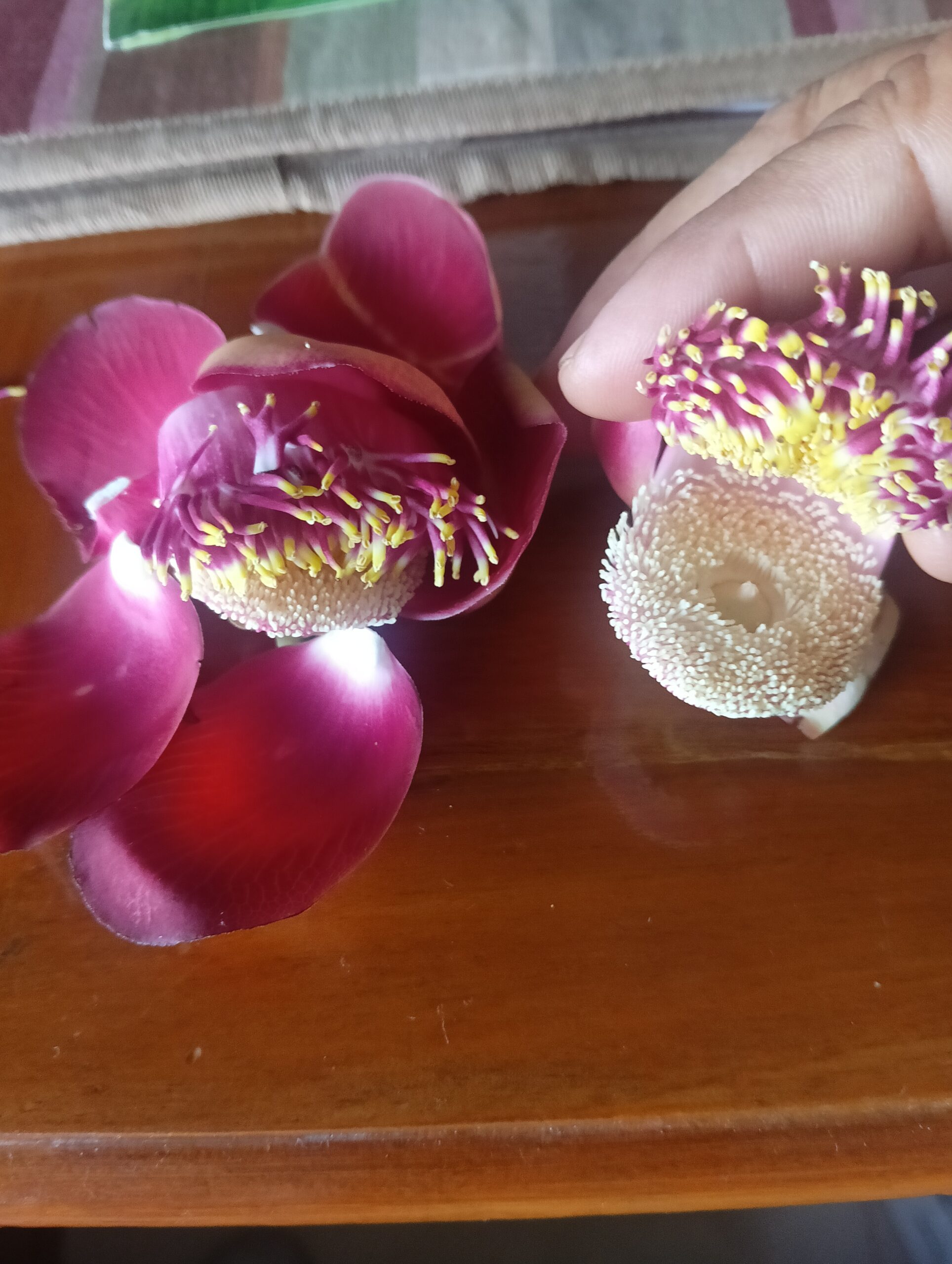
Another striking feature that caught our attention was the Nagalingam tree, known botanically as Couroupita guianensis. Its unusual flowers and large, round fruits make it one of the most fascinating trees found in tropical regions.
The tree is particularly associated with Indian religious and cultural traditions, and its distinctive flowers are regarded with reverence. Local beliefs and devotional practices surrounding such trees add another layer to the cultural experience of visiting historic temple precincts.
The temple surroundings also preserve a strong connection with traditional beliefs and devotional offerings. Visitors often encounter symbolic offerings associated with prayers for family well-being, marriage and children. Such practices are part of the living faith traditions that continue to give Varkala its distinctive character.
Varkala Cliff: The Meeting Point of Tourism and Tradition
Away from the temple, Varkala’s famous cliff presents an entirely different mood.
The dramatic laterite cliff overlooking the Arabian Sea is one of the defining geographical features of the destination. Kerala Tourism notes that the cliff rises prominently above the beach, offering sweeping views of the sea.
The Varkala Cliff market is a lively attraction for visitors. Shops offer handicrafts, clothes, jewellery, souvenirs and a variety of local products. Cafés and small establishments along the cliff create an international atmosphere, with travellers from different parts of India and abroad enjoying the sea view.
Here, ancient traditions and modern tourism meet naturally. A pilgrim may come to perform ancestral rites, while a traveller nearby may be shopping for souvenirs or simply watching the sunset over the Arabian Sea.
A Sea That Demands Respect
The Varkala coastline is beautiful, but the sea must be approached with respect. Waves and currents can become powerful, and local conditions can change.
During our stay, we observed safety personnel and warnings advising visitors to exercise caution in the water. Visitors should always follow current local safety instructions, designated swimming areas and lifeguard advice rather than assuming that every stretch of the coastline is suitable for swimming. Kerala Tourism also cautions that waves can be strong at times.
The sea at night creates another unforgettable spectacle.
From the shore, distant lights can be seen moving across the dark horizon—the fishing boats of Kerala’s coastal communities continuing their work far out at sea. For generations, fishing has been central to the livelihood and identity of many communities along Kerala’s coastline.
As darkness settles over Varkala, these lights seem almost like stars floating upon the Arabian Sea.
When the Fishing Boats Return
At dawn, the character of the coastline changes once again.
The fishing boats begin returning towards the shore, carrying the night’s catch. The sight connects the visitor directly with the working life of the coast—men who spend hours at sea while the tourist town sleeps, returning with the produce that sustains families and supplies Kerala’s seafood markets.
It is a reminder that behind every celebrated beach destination lies a living community whose relationship with the sea is much older than tourism itself.
Varkala: More Than a Beach Destination
Varkala offers an unusual combination of experiences. It is a beach destination, a pilgrimage centre, a heritage landscape, a cliff-top marketplace and a working coastal community—all within a relatively compact area.
For our international journalist group, the visit became more than a conventional sightseeing experience. From the quiet rituals at Papanasam to the steps of Janardhana Swamy Temple, from the ancient banyan and Nagalingam tree to the bustling cliff market, and from the evening sea to the fishing boats returning at dawn, Varkala revealed itself as a destination where nature and spirituality remain deeply intertwined.
The Arabian Sea here does not merely provide a spectacular backdrop. It is part of the story—of faith, livelihood, remembrance and renewal.
And perhaps that is the true charm of Varkala: the waves keep moving, generations change, travellers come and go, but the ancient relationship between the people, the temple and the sea continues.